
Criminal Court Cases in Okaloosa County
The Circuit Court of the First Judicial Circuit hears Okaloosa felony cases. County Court handles misdemeanors, criminal traffic, and municipal or county ordinance matters. Crestview, Fort Walton Beach, and Niceville do not keep separate city criminal-court dockets. The Okaloosa Clerk of Circuit Court and Comptroller is the records custodian for both local trial-court levels.
ClerkQuest case numbers can appear as YYYY-CF-######-F. CF identifies a felony file. MM labels misdemeanor categories, CT covers criminal traffic, and MO or CO identify ordinance matters. Those labels route a case; they do not state its outcome. Searchers must open the charge and docket fields to see whether the file is open, closed, dismissed, resolved by plea, or decided after trial.
Okaloosa ClerkQuest Filed Cases
ClerkQuest is Okaloosa County's official public trial-court search. It separates a prosecutor's filed charge from the initial allegation shown at booking. A case detail can show its caption, type, filing date, court location, Universal Case Number, judge, status, parties, attorneys, charges, docket events, and document access state.
The search returns no more than the first 500 results. A broad surname can therefore hide useful matches past that cap. Add both names, a date span, or a criminal case type. Florida has no single free public trial-court portal containing every county file, so ClerkQuest is the correct local layer.
Calendar search is a separate path from party search. It can expose the judge, session type, start and end time, location, and cases set for a chosen day. Observed session choices include felony arraignment, felony pretrial detention, motion hearing, docket, and miscellaneous criminal. Use the calendar when a hearing date is known, but return to the case detail for charge-level outcomes and document status.
Okaloosa County Case Record Searches
Use names for an unknown case number or date filters for a filing-period search. ClerkQuest requires first and last name together for a name query and both ends of a date range for a date query. Case-type filters keep civil and probate matters out of an Okaloosa County criminal case search.
- Open ClerkQuest Records Search and choose a criminal case type such as CF, CT, MM, MO, or CO.
- Enter both first and last name. Use a known case number when available.
- Narrow a large result set with filing dates or a more exact case type.
- Open the case and compare charge, plea, disposition, sentence, and each docket event.
- Place eligible electronic records in the cart or request copies and certification from the Clerk.
| Field Label | Type | Required | Notes |
|---|---|---|---|
| First Name | Text | Yes for name search | Must accompany last name |
| Last Name | Text | Yes for name search | Must accompany first name |
| Date From | Date | Yes for date search | Both date ends are required |
| Date To | Date | Yes for date search | Both date ends are required |
| Case Type | Dropdown | No | CF, CT, MM, MO, CO and other categories |
Certified Okaloosa Court Records
A visible docket is not always enough. The Clerk's official court-record request form supports copies, certified copies, and view-document requests. It asks for the party, case number if known, file type, document description or docket date, contact details, and delivery information. Processing can take several working days.
Regular copies cost $1 per page. A records search costs $2 per year, and certification is $2 per document. The separate county-only criminal-record certificate costs $2 per name per year plus a $7 certificate. That product covers specified adult Okaloosa court records, not a statewide Florida history.
Two physical counters serve the county. The north Clerk counter is at 101 East James Lee Boulevard in Crestview, while the south counter is at 1940 Lewis Turner Boulevard in Fort Walton Beach. Both publish weekday hours from 8:30 a.m. to 4:30 p.m. A visitor may ask for an older file, pay for copies, or request review of a view-on-request entry at either site. Call first when a file's location is uncertain.
The Fort Walton Beach Annex also houses the Public Law Library, which can help readers locate published law without providing legal advice.
What a Criminal Case File Contains
An Okaloosa case file joins the filed accusation to the events and outcome that followed. It is more detailed than FDLE's chronological repository record and more conclusive than a jail booking. Read each charge separately because pleas, dispositions, and sentences can differ within one case.
The parties table may include a person's role, attorney, and limited identifying fields. Charge rows can carry the offense date, statute, degree, plea and plea date, arrest date, OBTS number, arresting agency, disposition date, and sentence. Docket rows add an index, filing date, description, page count, and access state. These fields let a reader trace one allegation without assuming that the case-level word “Closed” means every charge ended the same way.
| Case Number & Court | Filing year, case type, sequence, court level, location, UCN, judge, and status. |
|---|---|
| Charging Document | The information, complaint, indictment, or other filed accusation, which may differ from booking. |
| Docket Entries | Dated filings, orders, notices, motions, descriptions, page counts, and document access status. |
| Hearing Dates | Arraignment, pretrial, motion, plea, trial, sentencing, and later review events. |
| Disposition & Judgment | The outcome for each charge, including dismissal, guilty disposition, acquittal, or adjudication withheld. |
| Sentence & Conditions | Custody, supervision, financial assessments, and other terms entered by the court. |
Reading Okaloosa Docket Terms
ClerkQuest uses short fields that carry different meanings. OBTS is the Offender Based Transaction System number that can connect a charge to an arrest cycle. UCN is the statewide Universal Case Number. A charge degree identifies its legal class, while disposition records what happened to that charge.
- Nolle prosequi
- The prosecutor formally chose not to continue a charge.
- Adjudication withheld
- The court withheld a formal adjudication after a plea or finding; it is not a dismissal.
- Nolo contendere
- A no-contest plea that permits the court to resolve the charge without a standard guilty plea.
- View on Request
- The document is not open by one click, but the Clerk can review a request for access.
Criminal Case Stages in Okaloosa County
The arrest report begins the agency trail, but the State Attorney decides whether and what to file. First appearance addresses custody and release. Arraignment addresses the accusation and plea. Discovery, motions, negotiations, or trial follow. The judge then records disposition and sentence, with later motions or an appeal possible.
Case flow: Charges Filed › Arraignment › Pretrial › Plea or Trial › Disposition › Sentencing
Okaloosa's inmate handbook says Plea Day normally follows first appearance. The court may address a plea, set trial, or order a presentence investigation. No fixed duration applies to every case because custody, motion practice, evidence, and trial needs vary.
Okaloosa Problem-Solving Court Dockets
Okaloosa County Court Services supports Pretrial Services, Mental Health Pretrial, Drug Court, Veterans Court, Mental Health Court, and Forensic Mental Health case management. Pretrial staff help inform first-appearance release decisions. The other programs screen eligible cases or coordinate treatment, veteran services, competency work, and court supervision.
Program participation does not erase a public docket by itself. Orders, hearings, progress events, disposition, and sentence can remain in ClerkQuest unless a law and court order restrict access. Readers should not infer failure or completion from one program-related docket entry.
The official program page supplied a visual of this local system.
It helps distinguish county pretrial and specialty services from the Clerk's role as case-file custodian.
Federal Cases Outside ClerkQuest
Federal crimes arising in Okaloosa County belong to the Pensacola Division of the U.S. District Court for the Northern District of Florida, not ClerkQuest. PACER is the official federal docket channel and requires registration. Quarterly charges of $30 or less are waived under PACER's policy; higher use is billed under its current schedule.
The official PACER interface shows why an Okaloosa County search may need a separate federal layer.
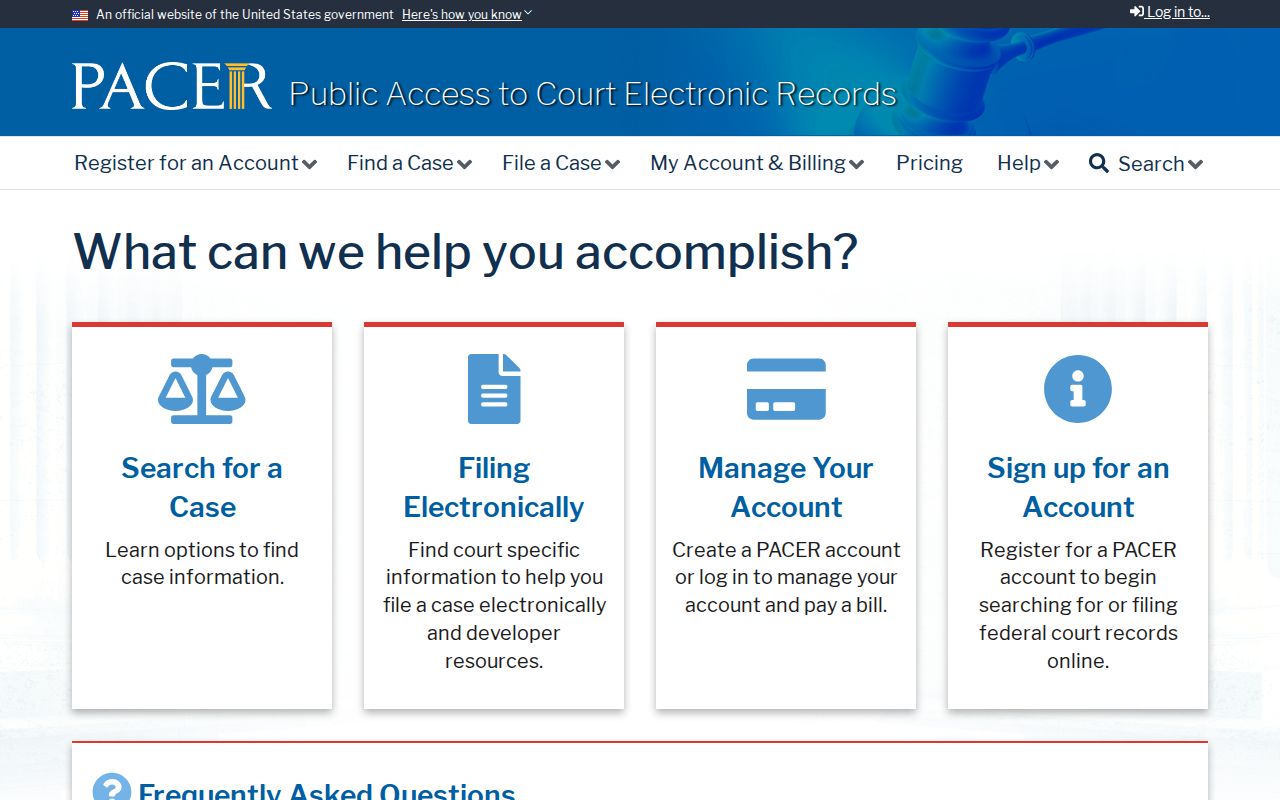
A ClerkQuest no-result does not rule out a federal case, just as PACER does not contain county prosecutions. Use the BOP locator, rather than the county jail search, when the question concerns federal custody.
Access Rules for Case Records
Florida Constitution article I, section 24 and section 119.07, Florida Statutes, establish broad access subject to exemptions. ClerkQuest labels documents Public, Non-Public, View on Request, Confidential, Sealed, or Request Pending. A missing PDF is not proof that a filing never existed.
Juvenile material, victim information, protected personal data, active investigative content, and sealed or expunged records can be withheld or redacted. Florida's expunction law and sealing law set distinct forms of relief. Eligibility is fact-specific and cannot be inferred from a charge label.
The official statute pages illustrate that access turns on the order and governing law.
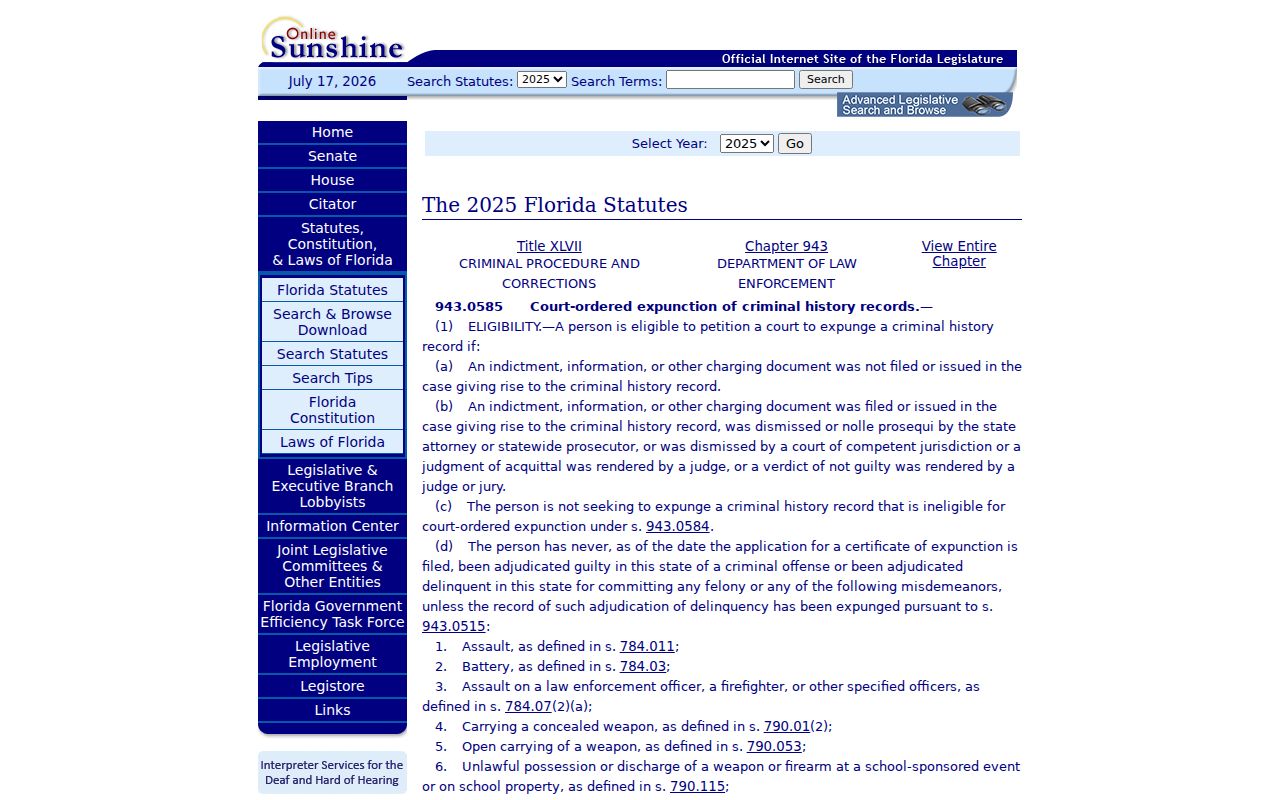
Sealing restricts public access, while expunction generally directs eligible agencies to destroy or remove records subject to statutory exceptions.
The expunction statute is also captured in the court-page source set.
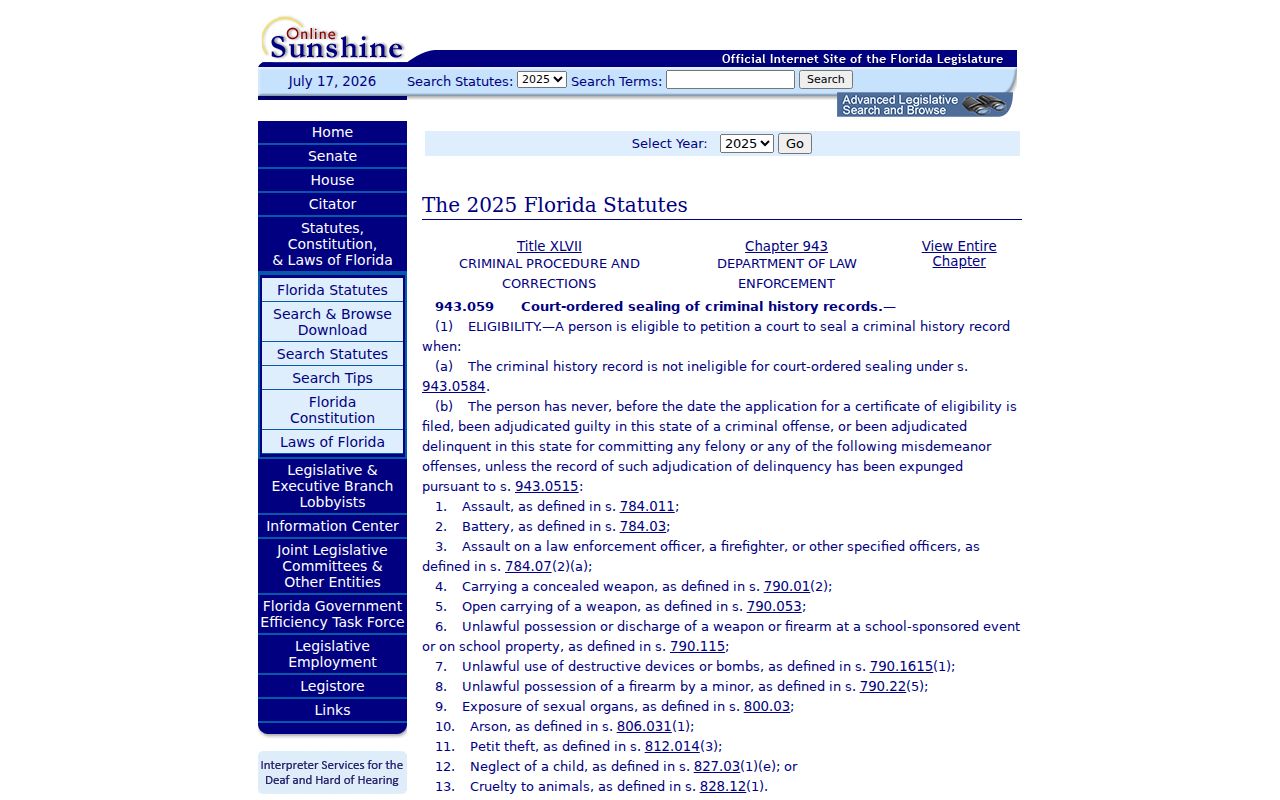
Both remedies begin with FDLE eligibility steps and require a court order; neither should be promised from an arrest outcome alone.
Florida's inspection statute explains inspection, copying, redaction, and exemption duties.
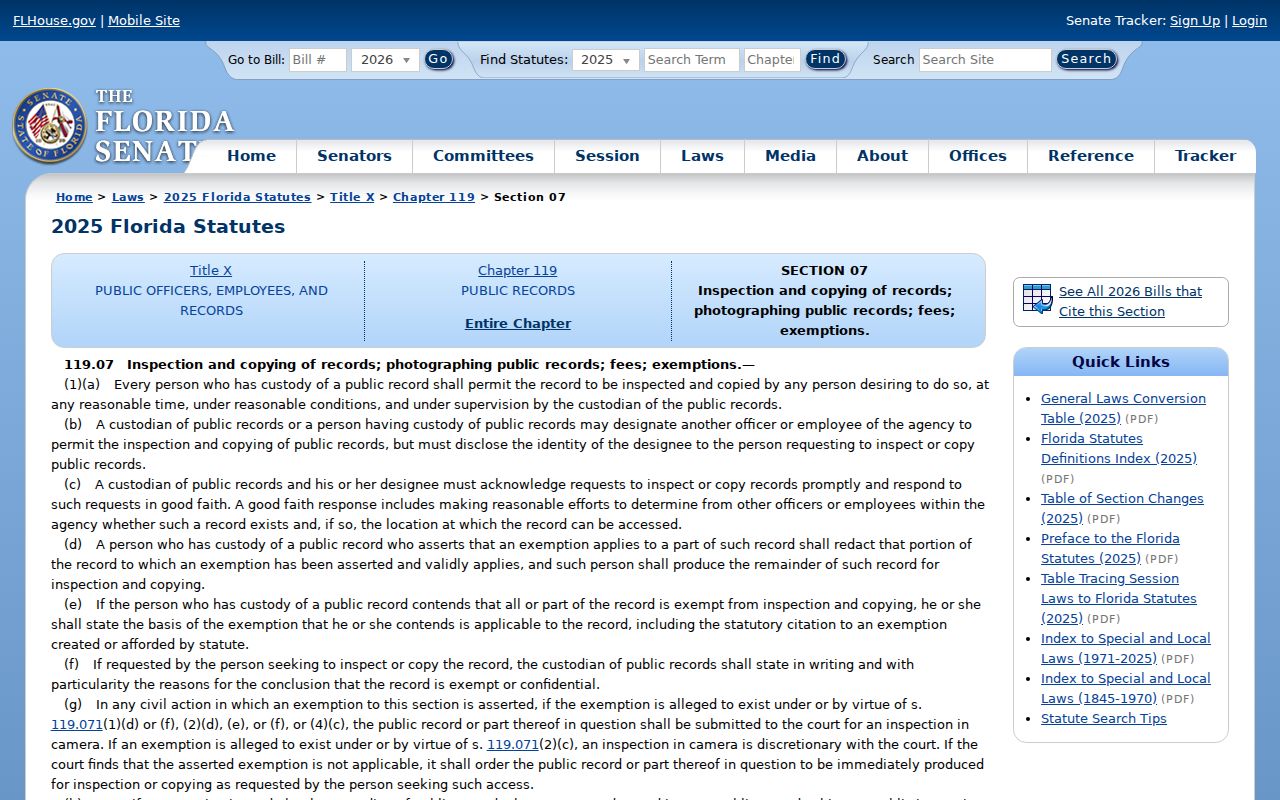
For an unavailable record, ask the Clerk whether it is view on request, archived, confidential, sealed, or outside that office's custody.